Chronic pain is the number-one reason international patients try traditional Chinese medicine in China. But where does the evidence actually stand — and when do you need biomedicine instead? An honest map of both systems.
What each system does best
Biomedicine excels at precise diagnosis and decisive intervention: imaging that finds the structural cause, procedures that repair it, medications that control acute flares. For red-flag conditions — progressive weakness, suspected fracture, cancer-related pain — it is irreplaceable, and nothing in this article suggests otherwise.
TCM’s strengths are complementary. Clinical guidelines in several countries now include acupuncture for chronic low-back pain, knee osteoarthritis and migraine prevention — precisely the conditions where pharmaceutical options are often limited to long-term medication. Tuina (Chinese medical massage) and moxibustion add manual and thermal therapies with long clinical histories inside China’s hospital system.
Where the two systems meet: China’s integrated pain programs
China is one of the few places where the integration is institutional rather than improvised. Leading TCM hospitals run pain departments that combine acupuncture, tuina and individualized herbal formulas with modern imaging and pharmacological management — under one roof, one medical record, one treatment plan.
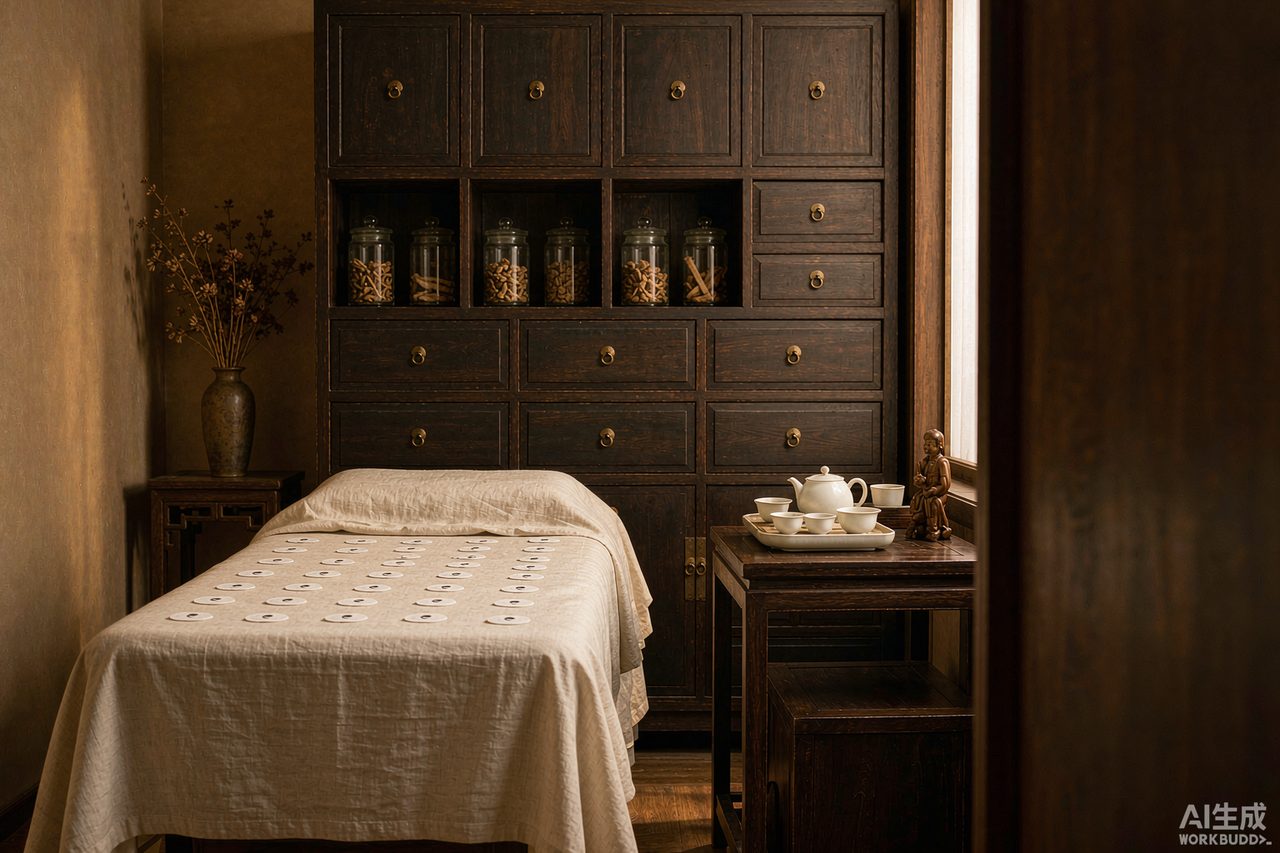
Shanghai Yueyang Hospital is a leading example: its Tuina department ranks among China’s strongest, and its newly opened international department pairs classical treatment rooms — including a music-therapy room and disc-decompression facilities — with direct billing for major international insurers.
What a TCM pain program actually looks like
A typical course for chronic pain runs as follows:
- Assessment: TCM pattern diagnosis (bianzheng) alongside your existing imaging and labs — bring them with you
- Treatment course: acupuncture sessions, typically 2–3 per week for 4–6 weeks (10–15 sessions in total)
- Combined therapies: tuina, cupping or moxibustion depending on your pattern
- Herbal support: individualized formulas, adjusted as your symptoms change
- Review: reassessment against your baseline pain and function scores
Expect measurable but incremental change. The evidence supports acupuncture as a course of treatment, not a single session — a point any honest clinic will make before you book.
Setting expectations honestly
TCM is not a substitute for necessary surgery, and no ethical clinic will promise a cure. What it offers chronic-pain patients is a genuine second pathway: drug-free symptom control, functional improvement and, for many, a reduction in medication dependence — outcomes that clinical reviews rate as meaningful for chronic low-back pain and osteoarthritis in particular.
Practical guidance for international patients
- Choose hospitals, not spas: TCM treatment at Class A tertiary TCM hospitals follows standardized protocols and physician accountability
- Share your full imaging and medication list in advance — interactions matter even for herbal formulas
- A coordinator who bridges both systems keeps your TCM team and your physician at home informed — that is precisely our role at Heal In China